


 Cart
Cart
 sales@molnova.com



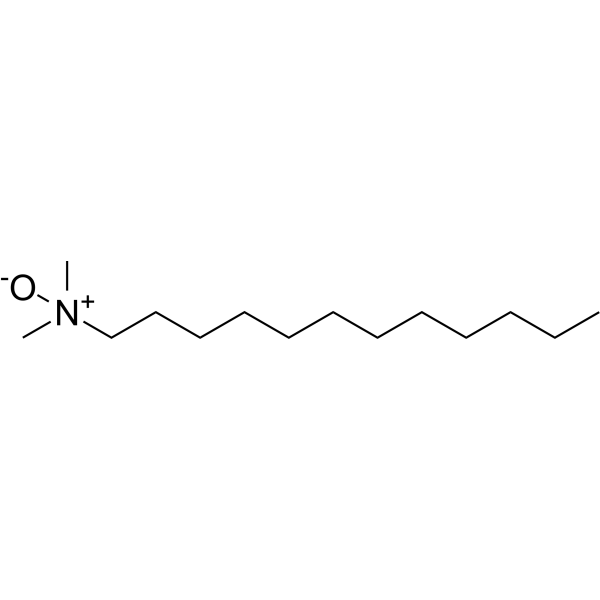
Lauramine oxide
CAS No. 1643-20-5
Lauramine oxide( Refan | Dimethylaurylamine oxide | LDAO | Lauryldimethylamine oxide )
Catalog No. M27347 CAS No. 1643-20-5
Lauramine oxide is effective against common bacteria such as E. coli and S. aureus, however it is non-denaturing and may be used to solubilize proteins.
Purity : >98% (HPLC)
 COA
Datasheet
HNMR
HPLC
MSDS
Handing Instructions
COA
Datasheet
HNMR
HPLC
MSDS
Handing Instructions
| Size | Price / USD | Stock | Quantity |
| 100MG | Get Quote | In Stock |


|
| 200MG | Get Quote | In Stock |
|
| 500MG | Get Quote | In Stock |
|
| 1G | 27 | In Stock |
|
Biological Information
-
Product NameLauramine oxide
-
NoteResearch use only, not for human use.
-
Brief DescriptionLauramine oxide is effective against common bacteria such as E. coli and S. aureus, however it is non-denaturing and may be used to solubilize proteins.
-
DescriptionLauramine oxide is effective against common bacteria such as E. coli and S. aureus, however it is non-denaturing and may be used to solubilize proteins.
-
In Vitro——
-
In Vivo——
-
SynonymsRefan | Dimethylaurylamine oxide | LDAO | Lauryldimethylamine oxide
-
PathwayGPCR/G Protein
-
TargetAntibacterial
-
RecptorAChR|BChE|Calcium Channel|cAMP|Parasite|DPPH
-
Research Area——
-
Indication——
Chemical Information
-
CAS Number1643-20-5
-
Formula Weight229.408
-
Molecular FormulaC14H31NO
-
Purity>98% (HPLC)
-
SolubilityIn Vitro:?DMSO : 100 mg/mL (435.92 mM)
-
SMILESCCCCCCCCCCCC[N+](C)(C)[O-]
-
Chemical Name——
Shipping & Storage Information
-
Storage(-20℃)
-
ShippingWith Ice Pack
-
Stability≥ 2 years
Reference
1.Nasrullah AA, et al. Antiplasmodial alkaloids from the bark of Cryptocarya nigra (Lauraceae). Molecules. 2013 Jul 8;18(7):8009-17.
molnova catalog



related products
-
Cetalkonium chloride
Cetalkonium chloride(Benzylcetyldimethylammonium chloride hydrate) is an ammonium preservative with anti-inflammatory activity that can be used in the study of aphthous ulcers.
-
Buramate
Buramate is an antipsychotic and anticonvulsant.
-
Nilofabicin
Nilofabicin is a potent inhibitor of enoyl-(acyl-carrier-protein) reductase fall(FabI) and can be used in studies about the treatment of complicated acute.
